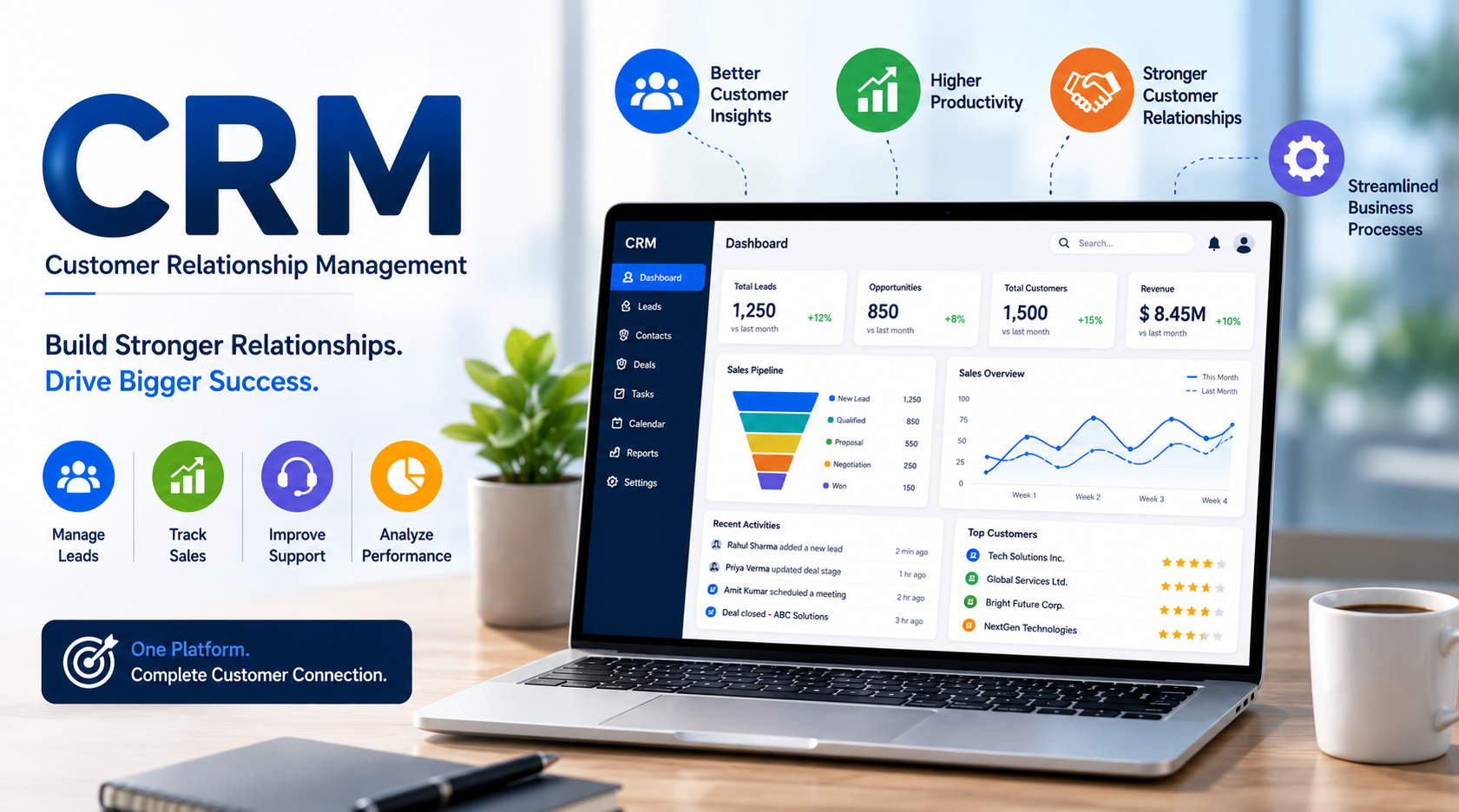
CRM: Complete Guide to Custome
CRM: Complete Guide to Customer Relationship Management
Introduction
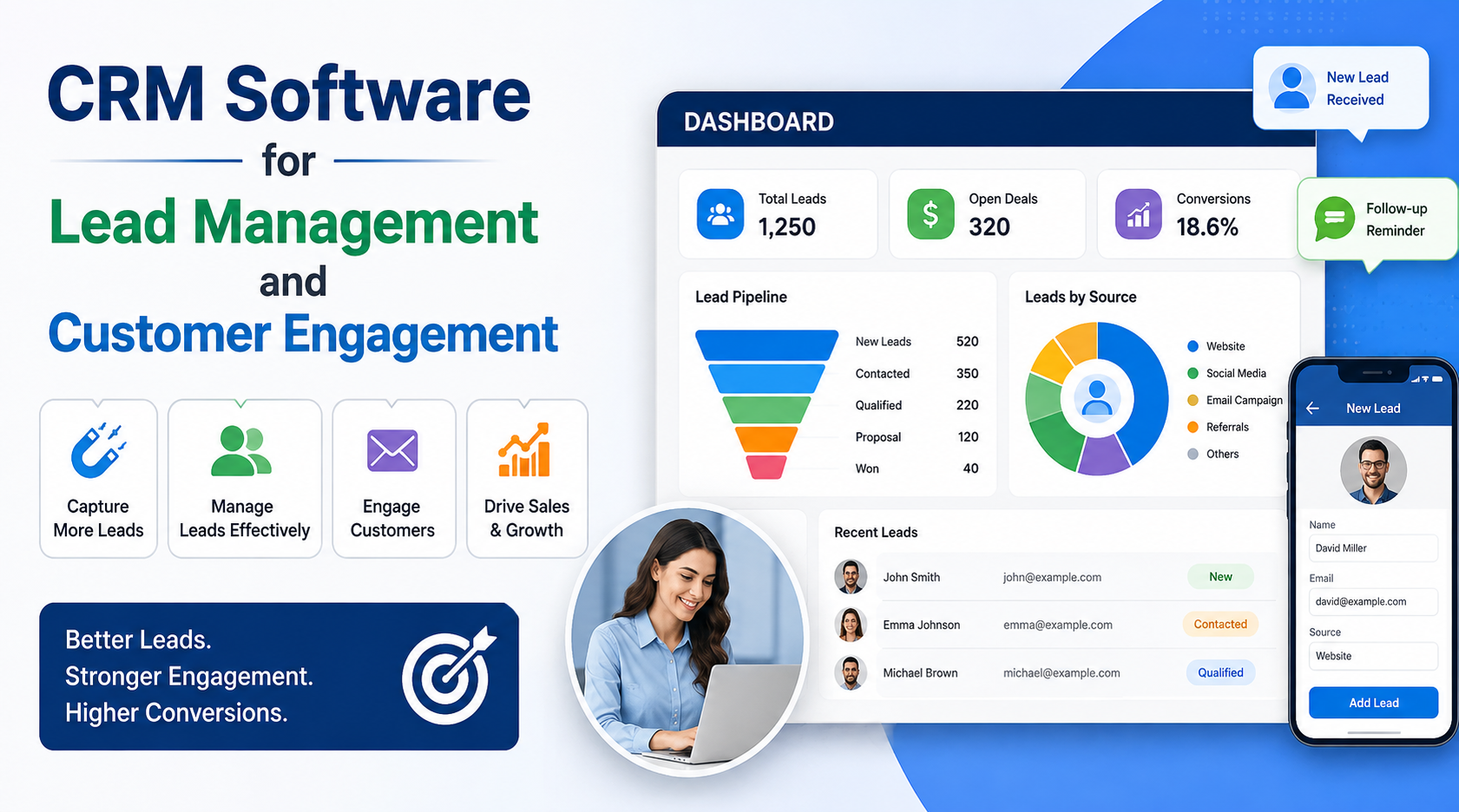
Customer relationships are at the heart of every successful business. As companies manage increasing numbers of leads, customers, sales opportunities, and support requests, handling customer information manually can become difficult. This is where CRM (Customer Relationship Management) software plays an important role.
A CRM system helps businesses organize customer data, manage leads, automate sales activities, improve communication, and build stronger customer relationships. From startups and small businesses to large enterprises, CRM solutions can help teams work more efficiently and make data-driven decisions.
What is CRM?
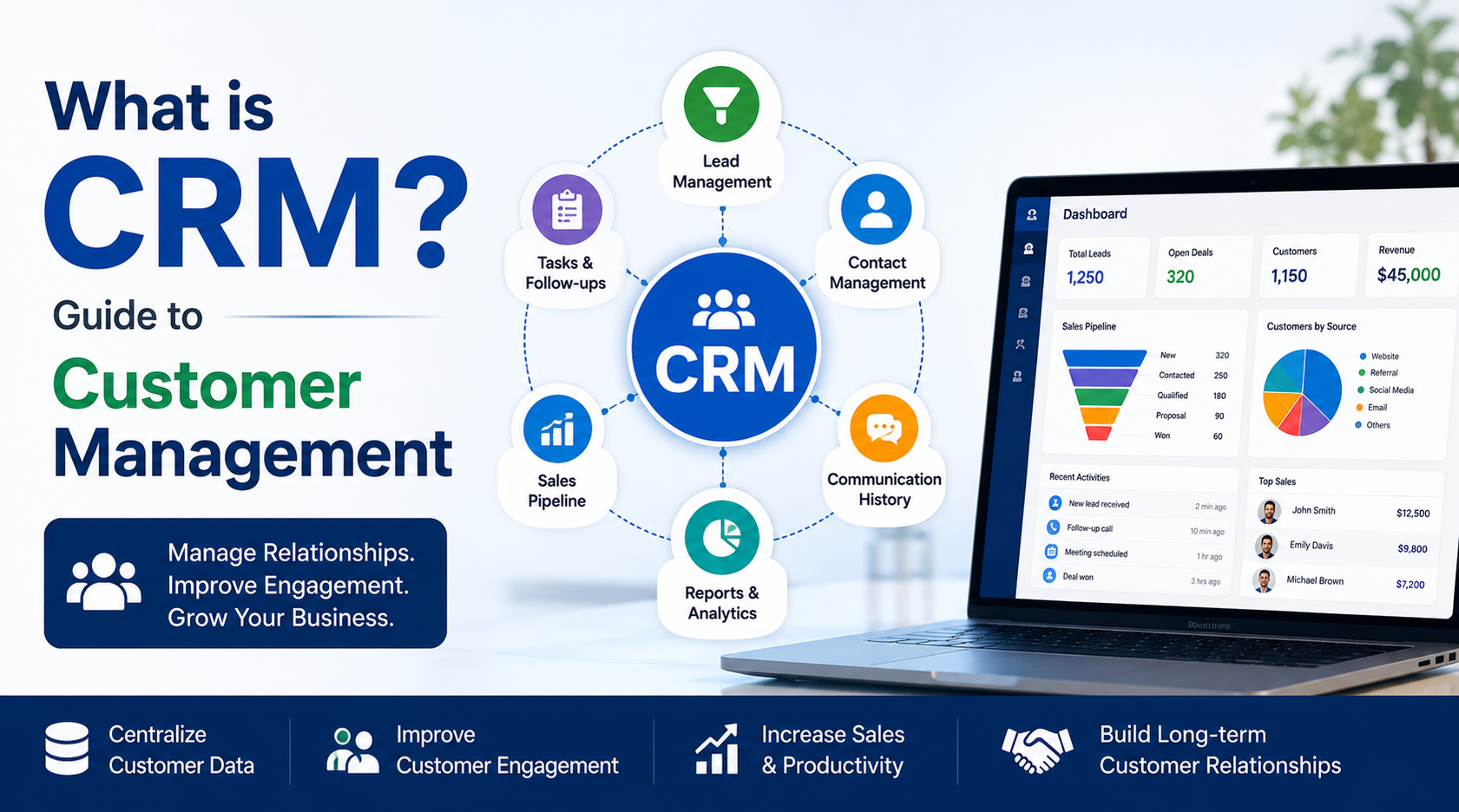
CRM stands for Customer Relationship Management. It refers to a combination of software, strategies, and processes that businesses use to manage interactions with existing and potential customers.
A CRM platform stores important customer information such as contact details, communication history, sales activities, inquiries, purchases, follow-ups, and support requests in one centralized system.
Instead of maintaining customer information across spreadsheets, emails, and different applications, businesses can use CRM software to access everything from a single platform.
Why is CRM Important for Businesses?
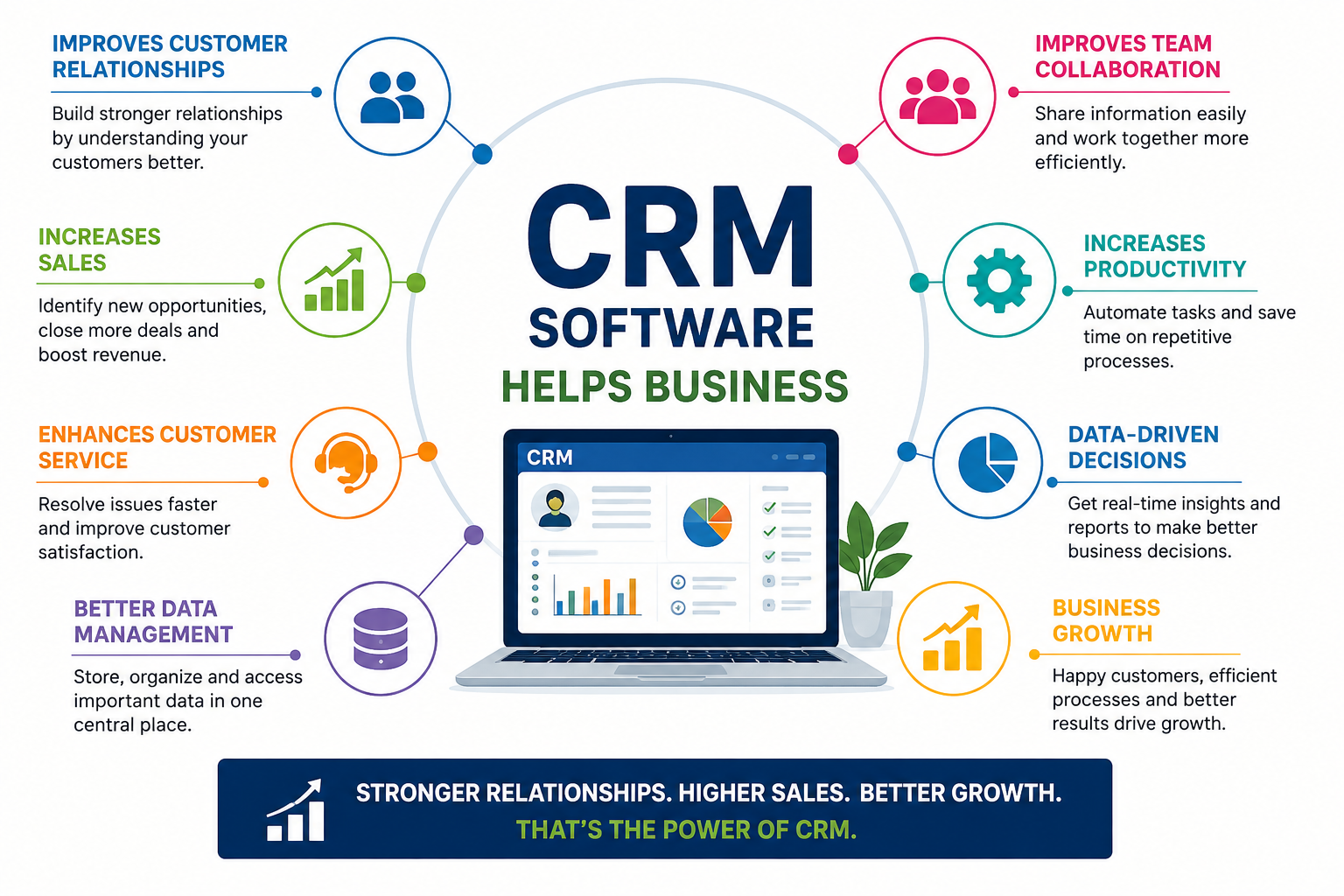
A CRM system provides businesses with better visibility into their customers and sales processes. It enables sales, marketing, and customer support teams to work with the same information.
Key benefits include:
- Centralized customer information
- Better lead management
- Improved sales tracking
- Automated follow-ups
- Enhanced customer support
- Better team collaboration
- Real-time business reports
- Improved customer retention
- Data-driven decision-making
By having a complete view of customer interactions, businesses can provide more personalized experiences and identify new opportunities.
Key Features of CRM Software
1. Contact Management
CRM software allows businesses to store and manage customer information in an organized database. Teams can quickly access contact details, previous interactions, notes, and customer activity.
2. Lead Management
CRM systems help businesses capture, categorize, and track leads throughout the sales process. Sales teams can identify promising prospects and prioritize follow-ups.
3. Sales Pipeline Management
A visual sales pipeline helps businesses monitor opportunities from the initial inquiry through negotiation and final conversion. Managers can easily understand which deals are progressing and which require attention.
4. Task and Follow-Up Management
CRM software can help sales representatives schedule calls, meetings, emails, and follow-ups. Automated reminders reduce the possibility of missing important customer interactions.
5. Marketing Automation
Many modern CRM platforms provide marketing automation capabilities, including email campaigns, customer segmentation, lead nurturing, and campaign tracking.
6. Customer Support Management
CRM systems can maintain customer service records, support tickets, complaints, and previous conversations. This allows support teams to resolve issues more efficiently.
7. Reports and Analytics
CRM dashboards provide valuable insights into sales performance, lead conversion, revenue, customer activity, and team productivity. Businesses can use these insights to make informed decisions.
8. Integration Capabilities
Modern CRM software can integrate with websites, email platforms, accounting systems, payment gateways, communication tools, e-commerce platforms, and other business applications.
Benefits of CRM for Different Teams
For Sales Teams
CRM software helps sales professionals manage leads, track opportunities, schedule follow-ups, and monitor their sales targets.
For Marketing Teams
Marketing teams can use CRM data to understand customer segments, create targeted campaigns, nurture leads, and measure campaign performance.
For Customer Support Teams
Support representatives can access customer history and previous conversations, enabling them to deliver faster and more personalized service.
For Management
Business managers can use CRM dashboards and reports to monitor revenue, sales performance, lead conversion, customer retention, and overall business growth.
CRM for Small and Growing Businesses
CRM is not only useful for large enterprises. Small and growing businesses can also benefit significantly from CRM software.
As the number of customers increases, managing customer data through spreadsheets or individual emails becomes increasingly challenging. A CRM system creates a structured process for managing leads and customers from the beginning.
Cloud-based CRM solutions can also provide businesses with access to customer information from multiple devices, making them suitable for remote and distributed teams.
How CRM Improves Customer Experience
Customers expect businesses to understand their needs and provide quick responses. CRM software helps companies create a more connected customer experience.
For example, when a customer contacts a business, the support or sales representative can view previous interactions, purchases, inquiries, and communication history. This reduces repetitive questions and allows the business to provide a more personalized response.
CRM and Business Automation
One of the major advantages of modern CRM platforms is automation. Businesses can automate repetitive activities such as lead assignment, email notifications, follow-up reminders, task creation, and reporting.
Automation allows employees to spend more time on customer engagement and strategic activities rather than repetitive administrative work.
How to Choose the Right CRM Software
Before selecting a CRM solution, businesses should consider their specific requirements.
Important factors include:
- Business size and industry
- Number of users
- Required CRM features
- Ease of use
- Customization options
- Integration capabilities
- Data security
- Mobile accessibility
- Reporting and analytics
- Scalability
- Pricing and total cost of ownership
- Customer support
A CRM solution should not only solve today's challenges but also support the organization's future growth.
Future of CRM
CRM technology continues to evolve with artificial intelligence, automation, predictive analytics, conversational interfaces, and advanced customer insights.
AI-powered CRM platforms can help businesses analyze customer behavior, identify sales opportunities, generate insights, automate communication, and predict potential customer needs.
As businesses increasingly focus on personalized customer experiences, CRM is expected to become an even more important part of digital business operations.
Conclusion
CRM is more than a customer database. It is a powerful business system that connects sales, marketing, customer support, and management through centralized customer information and streamlined processes.
By implementing the right CRM software, businesses can improve lead management, automate routine tasks, strengthen customer relationships, increase productivity, and make better business decisions.
Whether you are a startup, growing company, travel business, e-commerce company, or large enterprise, a well-designed CRM solution can provide the foundation needed to manage customer relationships and support long-term business growth.
Key Takeaways
- INDEX, FOLLOW
- CRM Software: Complete Guide to Customer Relationship Manage
- CRM, CRM software, customer relationship management, CRM sys
- Learn what CRM is, its key features, benefits, and importance for businesses. Discover how CRM software improves sales, customer service, automation,
Want to see this workflow in Desk CRM?
Book a short walkthrough with our team.